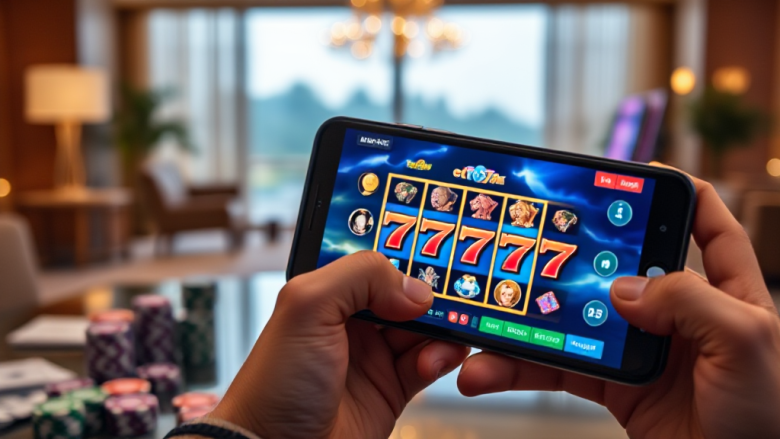
From Desktop to Pocket: Where CT777 Fits in Mobile Gaming
A decade ago, if someone in Pakistan wanted to play a few rounds of cards or spin a slot machine without leaving the house, the experience began and ended at a desktop computer. The machine sat in a corner of the room, booted up slowly, and tethered the player to a chair, an electricity supply, and a broadband connection that many households did not yet have. Today, the same activity happens on a screen that never leaves the owner’s hand. That migration from desk to pocket is not a small technical detail. It reshaped who plays, when they play, and what they expect from a gaming platform. Understanding that shift is the best way to understand where a platform like ct777 sits in the market.
The Desktop Era and Its Limits
For most of the 2000s and into the early 2010s, online gaming in Pakistan was a desktop-first affair. A player needed a personal computer, a stable internet connection, and enough privacy to sit through a session without interruption. Those requirements quietly excluded a large share of the population. A young professional sharing a family home might not have a private space for a computer. A shopkeeper working long hours might not have the time to sit at a desk at all. Even people who owned laptops treated them as work tools rather than entertainment devices.
The desktop era also shaped expectations in ways that later became obstacles. Sessions were long because logging in and out was cumbersome. Deposits and withdrawals were slow because they ran through banking channels designed for larger, less frequent transactions. Game libraries were deep but cluttered, built for mouse and keyboard rather than quick taps. The whole experience assumed a player with time, equipment, and patience. That assumption did not survive the smartphone.
What the desktop era did accomplish was proving demand. People were clearly willing to spend money and attention on digital games of chance when the experience felt trustworthy. The problem was access, not appetite. Once the access problem was solved, the market changed shape almost overnight.
Why the Smartphone Changed Everything
The smartphone removed every barrier the desktop had created at once. It arrived with its own battery, its own screen, its own connection, and its own identity. In Pakistan, mobile broadband penetration grew far faster than fixed-line internet ever had, because a phone did not require wiring, a separate room, or a family decision about where to put a computer. Gaming moved from a scheduled activity to a spontaneous one, something a person could do while waiting for a bus, during a lunch break, or in the quiet minutes before sleep.
This changed the rhythm of play. Sessions became shorter and more frequent. Players expected to open an app, see something interesting immediately, and close it without losing progress. They expected deposits and withdrawals to move at the speed of a mobile wallet rather than a bank branch. They expected bonuses to arrive daily rather than monthly, because daily contact is how a mobile relationship works. Platforms that had been built for desktop sessions suddenly looked slow and heavy next to apps designed for the pocket.
There was also a social dimension. A phone is personal in a way a shared computer never was. Notifications, saved passwords, and one-tap logins made the experience feel private and immediate. For gaming platforms, that privacy lowered the friction of signing up and lowered the embarrassment of trying something new. The result was a broader, younger, and more diverse audience than the desktop era had ever reached.
What Mobile-First Players Actually Expect
Once the audience moved to phones, its expectations hardened into a checklist. The first item is simple installation. A platform that requires a complicated setup process loses users before the first game loads, which is why APK downloads have become the standard entry point for mobile gaming in Pakistan. The second item is speed at every step: fast loading, fast signup, fast transactions. The third is variety within a small screen, because a mobile player wants slots, cards, and lottery-style games in one place rather than scattered across several apps.
Rewards sit near the top of the list as well. Mobile users are accustomed to daily engagement loops from messaging and social apps, and they carry that habit into gaming. A daily bonus is not a novelty to them; it is the baseline. Instant withdrawals matter for a similar reason. When money moves through a mobile wallet in seconds everywhere else, a withdrawal that takes days feels broken rather than merely slow.
Finally, mobile-first players expect the platform to respect the device. That means an interface built for thumbs, readable text on a small screen, and a design that does not drain the battery or demand constant re-authentication. These are unglamorous requirements, but they decide which platforms survive the transition and which ones are abandoned after a single session.
Where CT777 Fits in This Transition
CT777 is best understood as a product of the mobile era rather than a desktop platform that was retrofitted for phones. Its structure reflects the expectations described above. It offers slots, card games, and lottery games inside a single mobile experience, which matches the way pocket players prefer to browse rather than commit to one format. Signup is designed to be quick, because the platform assumes a user who decided to try it five minutes ago, not one who planned the session in advance.
The financial side of the platform follows the same logic. Instant withdrawals and daily bonuses are not add-ons; they are the features that make a mobile relationship sustainable. A player who can move money out quickly and receive something small every day has a reason to return, and returning is the entire game in a market where attention is fragmented across dozens of apps. The APK download model also fits Pakistan specifically, where app distribution often runs outside official stores and users are comfortable installing software directly.
Positioned this way, CT777 is less a standalone curiosity and more a representative example of where the category has landed. It takes the demand that the desktop era proved and delivers it in the format the smartphone era demands. The platform’s audience, mobile users in Pakistan looking to earn while playing games, is precisely the audience that the desktop model could never fully serve.
What Comes Next for Mobile Real-Money Gaming
The next few years will likely sharpen the trends already visible. Payments will keep getting faster, and platforms that cannot match mobile wallet speeds will lose ground. Game libraries will keep expanding, but curation will matter more than raw volume, because a small screen punishes clutter. Bonuses will become more personalized, moving away from one-size-fits-all daily rewards toward offers that reflect how each player actually behaves.
Regulation and trust will also shape the field. As real-money gaming grows on mobile, users will pay closer attention to how platforms handle withdrawals, data, and fairness. The platforms that survive will be the ones that treat speed and transparency as core features rather than marketing claims. Competition will come from new apps, but also from the broader attention economy, since a gaming app now competes with every other app on the same phone.
For observers of the market, the interesting question is no longer whether mobile gaming will dominate. It already does. The question is which platforms will still be relevant once the novelty of convenience wears off. The desktop era rewarded those who could build the biggest library. The mobile era rewards those who can fit a complete, trustworthy experience into a pocket, and that is a much harder standard to meet.